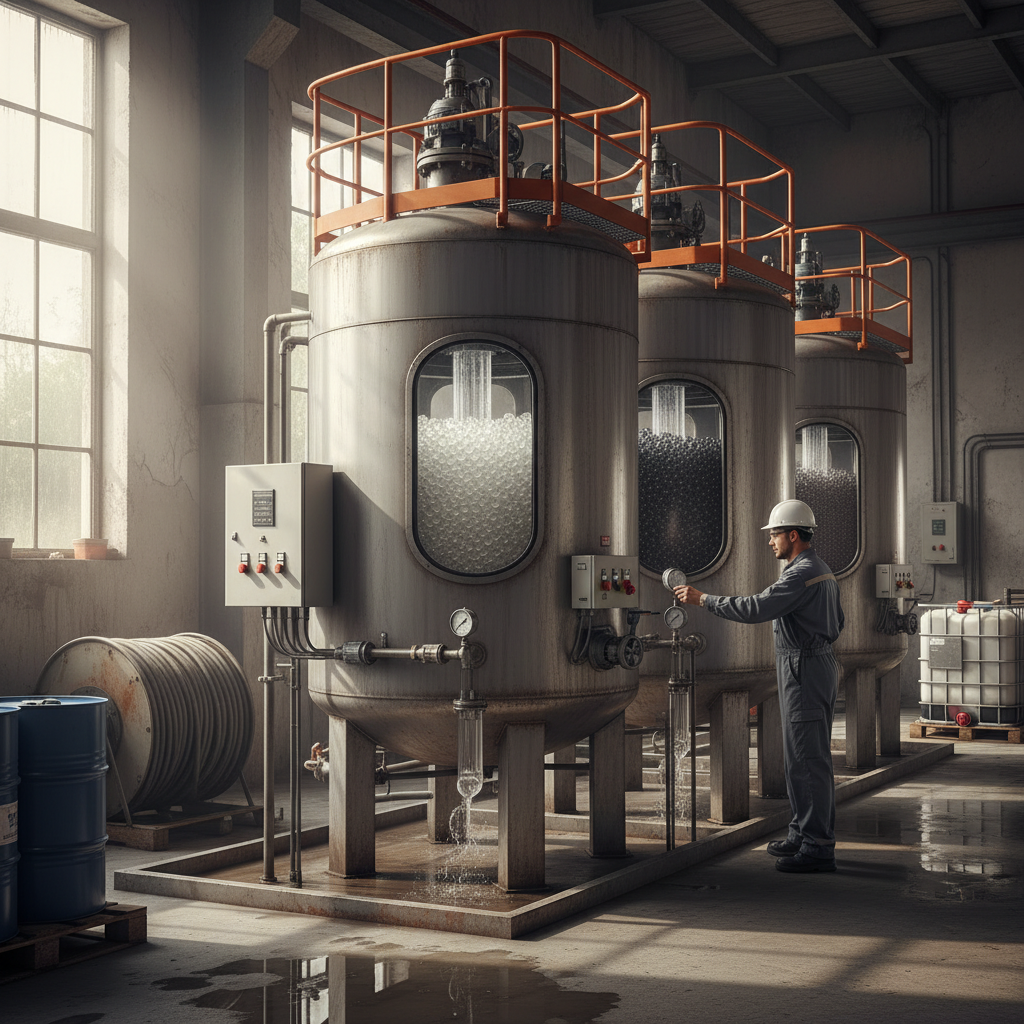
Understanding the ion exchange resin price involves more than just comparing unit costs; it requires an analysis of the resin's functional capacity, longevity, and the specific requirements of the target application. Whether used in water desalination or pharmaceutical purification, the price is typically driven by the resin's chemical structure, the purity of the raw materials, and the specialized grade—such as food, pharmaceutical, or nuclear grade.
For procurement managers in the chemical and synthetic materials industry, the total cost of ownership (TCO) is the primary concern. This includes not only the initial purchase price but also the costs associated with regeneration chemicals, water consumption, and the frequency of resin replacement. Selecting a low-cost resin with low exchange capacity often leads to higher operational expenses due to more frequent regeneration cycles.
This guide provides a technical and commercial framework for evaluating ion exchange resin pricing. We will explore the technical specifications that justify price variances, compare different resin types, and offer procurement strategies to balance initial investment with long-term operational efficiency, ensuring that your selection aligns with both your budget and your technical purity requirements.

1Factors Influencing Ion Exchange Resin Pricing

The pricing of ion exchange resins is fundamentally tied to the complexity of their synthesis and the purity of the final polymer beads. High-performance resins, such as chelating or special-purpose resins, require more precise cross-linking and functional group attachment, which increases production costs. Additionally, the grade of the resin—whether it is industrial, food, pharmaceutical, or nuclear grade—significantly impacts the price due to the rigorous testing and certification required for higher-tier applications.
Another critical factor is the volume of the order. Bulk procurement of standard strong acid cation (SAC) or strong base anion (SBA) resins typically allows for significant price reductions. However, customized resins tailored to specific molecular weights or unique ionic forms are produced in smaller batches, leading to higher per-unit costs but offering superior selectivity for target ions.
Finally, the geographic location of the manufacturer and the logistics of transporting wet resin beads also play a role. Since resins must be kept in a wet state (usually with a salt solution) to prevent bead collapse, shipping costs are higher than for dry chemicals, adding a layer of logistical expense to the final delivered price.
2Technical Specifications and Value Analysis
To determine if an ion exchange resin price is justified, one must analyze the exchange capacity. For example, a resin with a weight exchange capacity of ≥3.7 mmol/g can process significantly more ions per cycle than a lower-capacity alternative. This efficiency directly reduces the amount of resin required for a given volume of water or solution, lowering the total initial capital expenditure for the resin bed.
The uniformity coefficient is another key metric. A coefficient ≤1.4 indicates a more uniform particle size distribution, which prevents premature pressure drops and channeling within the column. While resins with high uniformity may command a premium price, they extend the intervals between backwashing, thereby reducing operational downtime and water waste.
Furthermore, the thermal stability of the resin—such as a maximum operating temperature of 120℃—allows the material to be used in high-temperature industrial processes. This robustness prevents the degradation of functional groups, extending the resin's operational lifespan and improving the long-term ROI compared to standard resins that would degrade under heat.
3Application-Specific Resin Selection
Different applications demand different resin types, which in turn dictate the pricing structure. In desalination and cyanide pulp adsorption, high-capacity strong base resins are preferred for their ability to remove a wide spectrum of anions. In these high-volume environments, the priority is often a balance between cost and regeneration efficiency.
Conversely, in the biopharmaceutical or nuclear sectors, the "cost" is measured by risk and purity. Pharmaceutical grade resins must comply with FDA standards and undergo strict leaching tests to ensure no monomers migrate into the final product. The added cost of these certifications and the cleaner production environments is reflected in a higher market price.
Selecting the wrong resin based solely on a low price can be catastrophic. For instance, using a resin with a low whole bead count (below 95%) leads to an increase in "fines," which can clog downstream filters and increase the frequency of expensive resin replacement, far outweighing any initial savings.
4Performance Metrics and Cost Efficiency
Analyzing the relationship between resin quality and cost efficiency requires looking at the regeneration velocity and the amount of chemical agent needed. A high-quality resin that allows for a regeneration velocity of 1-2 BV/h with a specific agent (like 3-5% HCl) can reduce the chemical spend per year by a substantial margin.
When we evaluate the cost per cubic meter of treated water, resins with higher water retention capacity (50-60%) and better ionic forms provide a more stable throughput. This consistency prevents "breakthrough" events where contaminants leak into the effluent, which would otherwise lead to costly product loss or regulatory fines.
ion exchange resin price Performance Metrics
As shown in the performance comparison, investing in higher-grade resins—despite a higher initial price—typically results in superior purity and capacity. The reduced need for frequent backwashing and a longer resin lifespan mean that the cost per unit of processed material is actually lower over a three-to-five-year horizon.
5Procurement Strategies for Industrial Resins
Efficient procurement starts with defining the exact operational parameters. Buyers should specify the required ionic form (e.g., Cl- form) and the minimum exchange capacity rather than requesting a generic product. This prevents the supplier from providing a lower-grade resin that meets the "name" but fails in operational performance.
It is also advisable to consider the "regeneration cost" in the procurement bid. A supplier may offer a lower resin price but a resin that requires more expensive or larger volumes of regenerants. Requesting the specific regeneration agent requirements (e.g., 2BV of 4% NaOH) allows for a true comparison of operating costs.
Finally, establishing long-term contracts with manufacturers who provide customized solutions can lower the TCO. Companies that integrate R&D, like Hebei Lijiang Biotechnology, can customize resins to fit specific wastewater profiles, reducing the overall volume of resin needed and optimizing the system's flow path.
6Market Trends in Synthetic Resin Manufacturing
The market for ion exchange resins is shifting toward "specialty" and "functional" polymers. There is a growing demand for resins that can operate under extreme pH levels or high salinity, which are common in modern hydrometallurgy and rare earth extraction. This trend is driving the development of more complex cross-linked structures, which increases the price but enhances durability.
Sustainability is also impacting production costs. Manufacturers are increasingly adopting greener synthesis methods to reduce the emission of volatile organic compounds (VOCs). While these environmental compliance measures may slightly increase the base price, they ensure the supply chain's longevity and reduce the risk of regulatory shutdowns.
Looking forward, the industry is moving toward "smart resins" with higher selectivity for specific toxic ions. This will allow for the treatment of highly contaminated waste streams with smaller resin beds, shifting the value proposition from "volume of resin" to "efficiency per bead."
7Comparison of Resin Grades and ROI
When choosing between different resin grades, the decision should be based on the required purity level and the budget for operational maintenance. Industrial grade resins are cost-effective for basic water softening, while pharmaceutical and nuclear grades are mandatory for high-purity environments where contamination is not an option.
The following table compares common resin types used in the industry, highlighting how their technical strengths correlate with their typical market positioning and ROI factors.
| Resin Type | Primary Strength | Typical Application | ROI Driver |
|---|---|---|---|
| Strong Acid Cation | High Capacity | Water Softening | Low Initial Cost |
| Strong Base Anion | Broad Removal | Demineralization | Operational Stability |
| Chelating Resin | High Selectivity | Metal Extraction | Product Recovery Value |
| Mixed Bed Resin | Ultra-High Purity | Electronics/Pharma | Zero Contamination |
| Weak Base Anion | Easy Regeneration | Alkaline Removal | Low Chemical Spend |
| Specialty Resin | Custom Function | Biotech/Nuclear | Regulatory Compliance |
In conclusion, the most cost-effective choice is rarely the cheapest one. By focusing on the exchange capacity, uniformity, and regeneration requirements, companies can select a resin that optimizes the balance between the initial purchase price and the long-term cost of operation.
Frequently Asked Questions
Conclusion
Selecting the right ion exchange resin requires a shift in perspective from initial procurement price to total operational efficiency. By analyzing technical metrics such as exchange capacity, bead uniformity, and thermal stability, operators can ensure that their system achieves the necessary purity levels with minimal downtime and chemical waste.
Whether you are managing large-scale water treatment or precision biopharmaceutical extraction, balancing quality and cost is the key to sustainable operation. For those evaluating suitable resin solutions and specific product grades, detailed technical data and customization options are available at www.lijiresins.com.