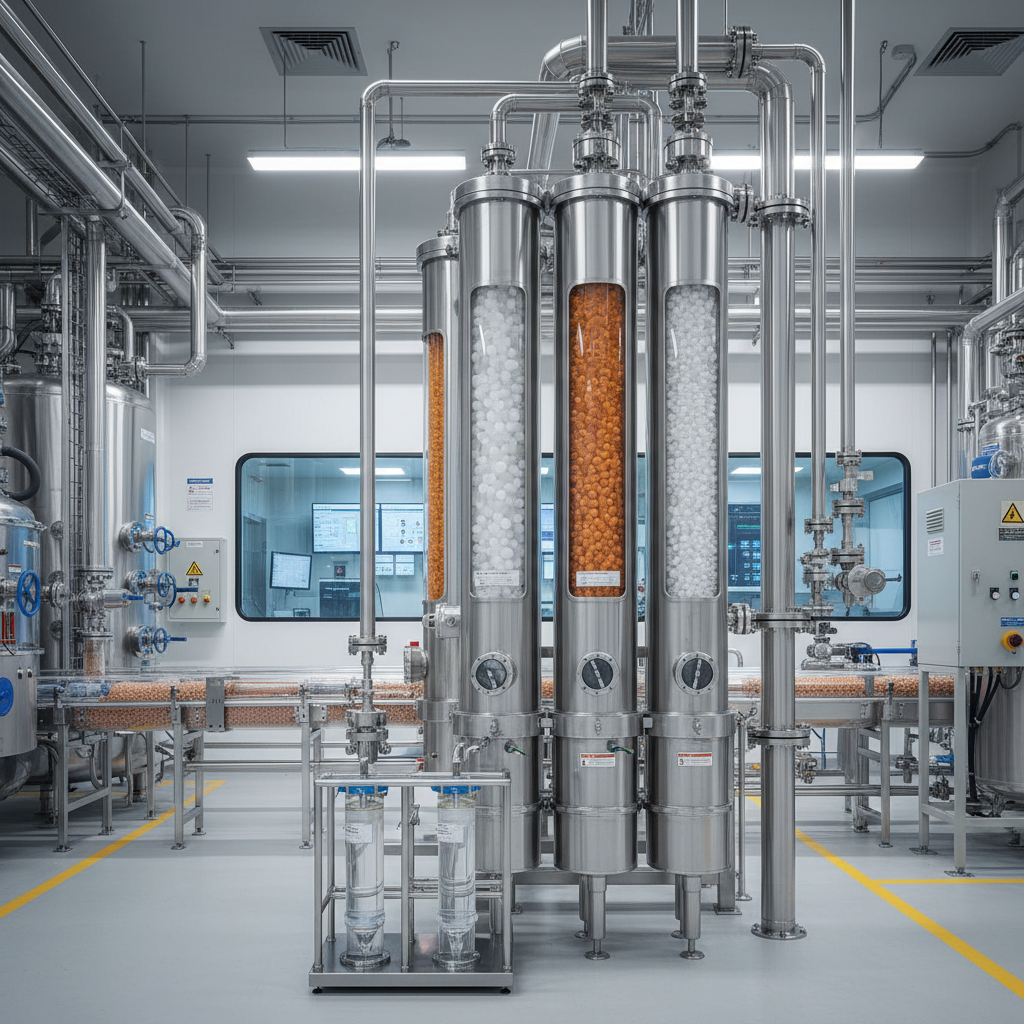
Water softening is a critical chemical process used across various industries to remove hardness ions, primarily calcium and magnesium, from water supplies. The effectiveness of this process depends heavily on the quality of the ion exchange medium used. For procurement officers and plant engineers, the goal is to find a balance between exchange capacity, physical stability, and long-term durability to ensure consistent water quality. buy water softener resin choices often determine the overall efficiency of the treatment plant.
In industrial environments, the selection of an ion exchange material is not merely about the initial purchase but about the total cost of ownership. Factors such as the resin's cross-linking density, functional group stability, and resistance to organic fouling play a pivotal role in operational uptime. Whether for pharmaceutical-grade water or industrial wastewater treatment, utilizing high-performance materials minimizes the frequency of regeneration and reduces chemical waste.
This guide provides a technical framework for evaluating ion exchange media, specifically focusing on the specifications and operational requirements necessary for high-purity applications. Readers will learn how to interpret technical data sheets, optimize flow rates for maximum capacity, and evaluate suppliers based on certifications like ISO9001 and WQA to ensure the purchased material meets stringent safety and performance standards.
Industrial Water Softening Fundamentals
At its core, water softening involves the replacement of hardness-causing ions with sodium or potassium ions through a selective chemical exchange. This is achieved using polymer beads—typically gel polystyrene crosslinked with divinylbenzene—which provide a high surface area for ion interaction. The efficacy of this process is measured by the exchange capacity, which defines how many equivalents of ions the resin can hold per unit of volume or weight. In a commercial context, choosing a resin with a higher dry exchange capacity (e.g., ≥3.5mmol/g) allows for longer run times between regeneration cycles.
Beyond simple ion exchange, the physical structure of the bead is paramount. A uniformity coefficient of ≤1.6 ensures that the bed packs evenly, preventing "channeling" where water bypasses the resin, leading to premature hardness breakthrough. For those looking to buy water softener resin, understanding these technical parameters is essential to avoid purchasing materials that may degrade under high-pressure or high-temperature conditions. Professional-grade materials are often certified by international bodies like the FDA for food-grade applications, ensuring that no harmful chemicals leach into the treated water stream.
Strategic Procurement of Ion Exchange Materials
Procuring ion exchange media requires a deep dive into the alignment between the product's technical specifications and the specific demands of the water chemistry. A high-performance resin must not only offer high capacity but also maintain structural integrity over hundreds of regeneration cycles. The following sections break down the key technical and commercial considerations for selecting the right material.
Understanding Resin Specifications
Technical data sheets provide the blueprint for expected performance. Key metrics include bulk density, which affects the volume of the vessel required, and water retention capacity, which impacts the hydraulics of the bed during backwashing. A high whole-bead count (≥95%) is critical to minimize fines that can clog filters downstream. For industrial applications, comparing these specifications against benchmark brands like Amberlite or Diaion helps in verifying the quality tier of the material.
| Technical Parameter | Industrial Requirement | Impact on Performance | Evaluation Method |
|---|---|---|---|
| Exchange Capacity | ≥1.3 mmol/ml (Vol) | Determines run time between regenerations | Lab Titration |
| Uniformity Coefficient | ≤1.6 | Prevents channeling and pressure drops | Sieve Analysis |
| Whole Bead Count | ≥95% | Reduces pressure drop and fines loss | Visual/Weight Check |
| Max Operating Temp | Up to 100°C | Ensures stability in hot water loops | Thermal Stress Test |
| Bulk Density | 0.67~0.73 g/ml | Influences bed height and vessel sizing | Volumetric Measure |
| Water Retention | 42%~48% | Affects backwash flow requirements | Saturation Test |
Application Scenarios for Gel Polystyrene
Gel polystyrene resins are versatile and widely used in pure water preparation and wastewater treatment. Because of their high capacity, they are ideal for large-scale desalination and the removal of rare elements in wet metallurgy. In biopharmaceutical settings, specialized resins are required to ensure zero contamination, often demanding pharmaceutical-grade certifications. The adaptability of these materials allows them to be customized for specific ionic forms, such as Cl- or OH-, depending on whether the goal is softening or complete demineralization.
Operating Velocity and Flow Dynamics
The operating velocity, typically between 2 to 10 BV/h (Bed Volumes per hour), is a critical design factor. If the velocity is too high, the contact time between the water and the resin beads is insufficient, leading to "leakage" of hardness ions. Conversely, too low a velocity can lead to inefficient bed utilization. Engineers must also account for backwash velocity (4-10 BV/h) to ensure the bed is properly expanded and cleaned of suspended solids without washing the resin out of the vessel.
Regeneration and Chemical Efficiency
The lifecycle cost of a resin is determined by its regeneration efficiency. Using agents such as 3-5% HCl or 2-4% NaOH requires precise dosing to restore the resin's capacity without causing osmotic shock. Osmotic shock, caused by rapid changes in ion concentration, can crack the beads, reducing the whole-bead count. A professional system usually implements a specific flow path—such as alkali-water-acid-water—to ensure complete desorption of contaminants and stable performance.
Compatibility with Water Quality Standards
Compliance with standards such as FDA, ISO9001, and WQA is non-negotiable for food and medical applications. The use of materials that meet these standards ensures that the resulting water is safe for human consumption or pharmaceutical synthesis. When evaluating a manufacturer, buyers should verify that the resins are produced in facilities with strict quality control over raw materials (like divinylbenzene) to prevent the presence of residual monomers that could contaminate the output.
Maintenance and Storage Protocols
Resin degradation often occurs during storage rather than operation. To prevent dehydration and bead shrinkage, resins must be kept in a wet state, ideally in a closed space with a 5% salt solution. Anti-freezing measures are mandatory during transportation to avoid permanent structural damage to the polymer matrix. Furthermore, avoiding the placement of heavy objects on resin bags prevents physical crushing, which would otherwise increase the percentage of fines and impair flow dynamics.
Supplier Evaluation Criteria
A reliable supplier provides more than just a product; they provide technical solutions. Hebei Lijiang Biotechnology Co., Ltd, for instance, integrates R&D with production, allowing for the customization of specialized resins. Buyers should look for suppliers with a dedicated testing center and application center. The ability to provide "point-to-point" solutions—where the resin is tailored to the specific influent water chemistry—is a hallmark of a high-tier manufacturer compared to a simple distributor.
FAQ
What is the difference between food-grade and industrial-grade resin?
Food-grade resins are manufactured under stricter purity controls to ensure they meet FDA and national food hygiene standards, preventing any chemical leaching into potable water. Industrial-grade resins focus on maximizing exchange capacity and durability for processes like wastewater treatment or metallurgy, where human consumption of the water is not the primary concern.
How often should the ion exchange resin be replaced?
Replacement intervals vary based on water quality and regeneration frequency. Typically, industrial resins last 3 to 5 years. However, signs of degradation—such as a significant increase in pressure drop across the bed or a decrease in the run time between regenerations—indicate that the resin is fouling or breaking down and needs replacement.
Can I use any acid for regenerating the resin?
No, the regeneration agent must be compatible with the resin's functional group. For strong-base anion resins, 3-5% HCl is commonly used for desorption. Using an incompatible or overly concentrated acid can cause permanent damage to the polymer structure or leave residue that reduces the exchange capacity.
What causes "channeling" in a resin bed?
Channeling occurs when water finds a path of least resistance through the bed, bypassing much of the resin. This is usually caused by uneven resin packing, a high uniformity coefficient, or the accumulation of suspended solids (fines) that block certain areas. Proper backwashing and using resin with a uniformity coefficient of ≤1.6 can prevent this.
Why is the whole-bead count important?
A high whole-bead count (e.g., ≥95%) indicates that very few beads have been crushed or broken. Broken beads create "fines," which fill the gaps between whole beads, significantly increasing the pressure drop and potentially clogging the system. It also ensures more predictable flow dynamics and regeneration efficiency.
How do I store resin for long periods?
Resins should be stored in a closed container to prevent dehydration. Adding a salt solution of 5% or higher is recommended to maintain the beads' hydration and prevent biological growth. Ensure the storage area is kept above 0°C to avoid freezing, which can shatter the polymer matrix.
References and further reading
- Water Quality Association (WQA) International Certification Standards for Ion Exchange Resins.
- FDA Regulations on Food-Grade Polymers and Materials for Water Contact.
- ISO 9001:2015 Quality Management Systems for Chemical Manufacturing.
Related Articles