In the sophisticated realm of chemical separation and purification, the use of ion exchange chromatography resin stands as a cornerstone for achieving high-purity extracts. These specialized polymer matrices are engineered to selectively bind target molecules based on their electrostatic charge, allowing for the precise isolation of proteins, amino acids, and inorganic ions from complex mixtures. By leveraging the principles of reversible adsorption, industries can achieve levels of purity that were previously unattainable through standard filtration or precipitation methods.
The global demand for these resins is driven by the escalating needs of the pharmaceutical, biotechnology, and environmental sectors. From the purification of monoclonal antibodies in life-saving medicines to the removal of toxic heavy metals from industrial wastewater, the versatility of these resins ensures they remain indispensable. Understanding the nuances of resin selection—such as pore size, functional group density, and mechanical stability—is critical for optimizing yield and reducing operational costs in large-scale production.
Ultimately, mastering the application of ion exchange chromatography resin allows manufacturers to balance efficiency with sustainability. As the industry moves toward "green chemistry," the development of biodegradable supports and high-capacity ligands is transforming how we approach purification. This guide explores the technical foundations, practical applications, and future trajectories of these essential materials to provide a comprehensive overview for industry professionals and researchers alike.
Global Industry Context of Ion Exchange Chromatography Resin
On a global scale, the market for ion exchange chromatography resin has seen exponential growth, aligning with the expansion of the global biopharmaceutical sector. According to industry analysis and ISO quality standards, the push for high-purity ingredients in medicine and food production has made precise ionic separation a non-negotiable requirement. The ability to remove trace impurities at the parts-per-billion (ppb) level is now a standard expectation across North American and European markets.
However, the industry faces a significant challenge: the trade-off between resin capacity and flow rate. Many traditional resins suffer from high pressure drops in large-scale columns, which can lead to bottlenecks in production cycles. As manufacturers strive to meet the demands of personalized medicine and rapid vaccine deployment, there is an urgent need for resins that provide both high selectivity and rapid kinetics without compromising the structural integrity of the polymer matrix.
Defining the Mechanism of Ion Exchange Chromatography Resin
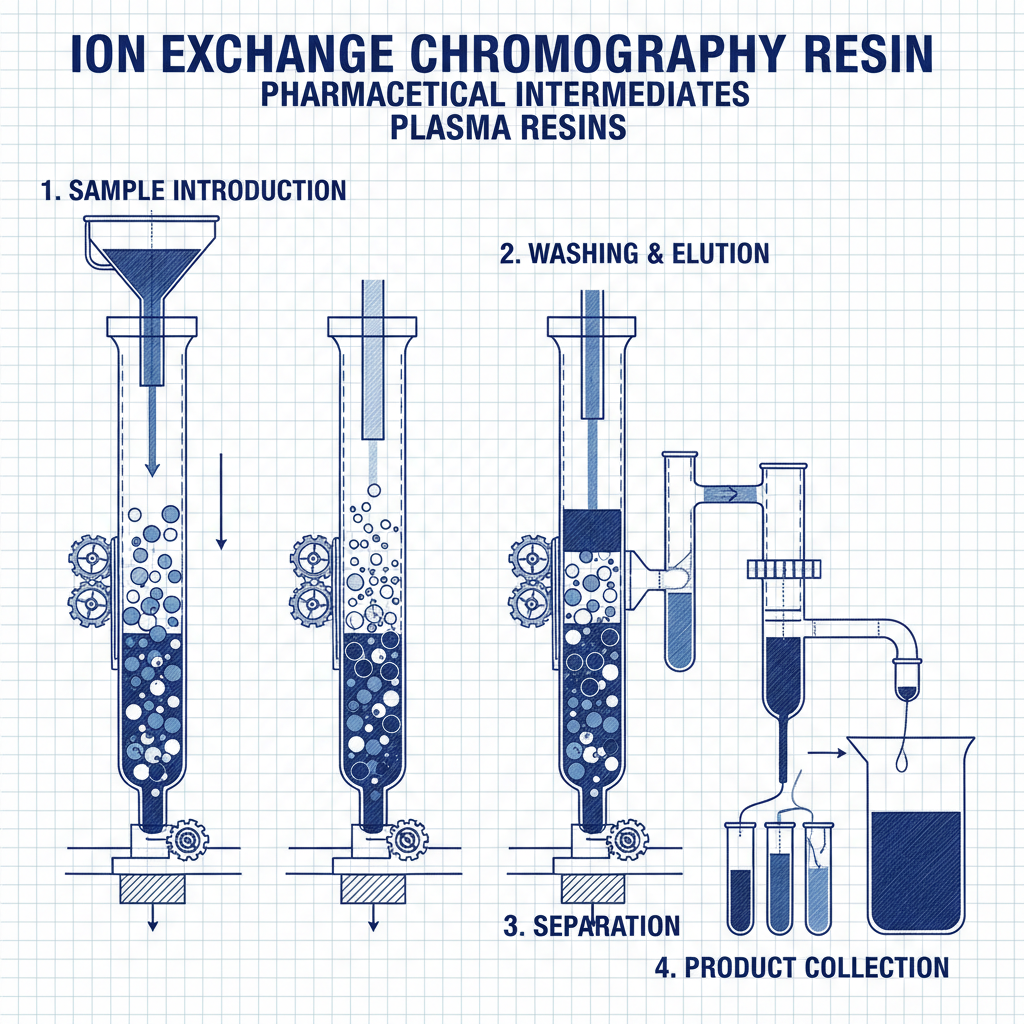
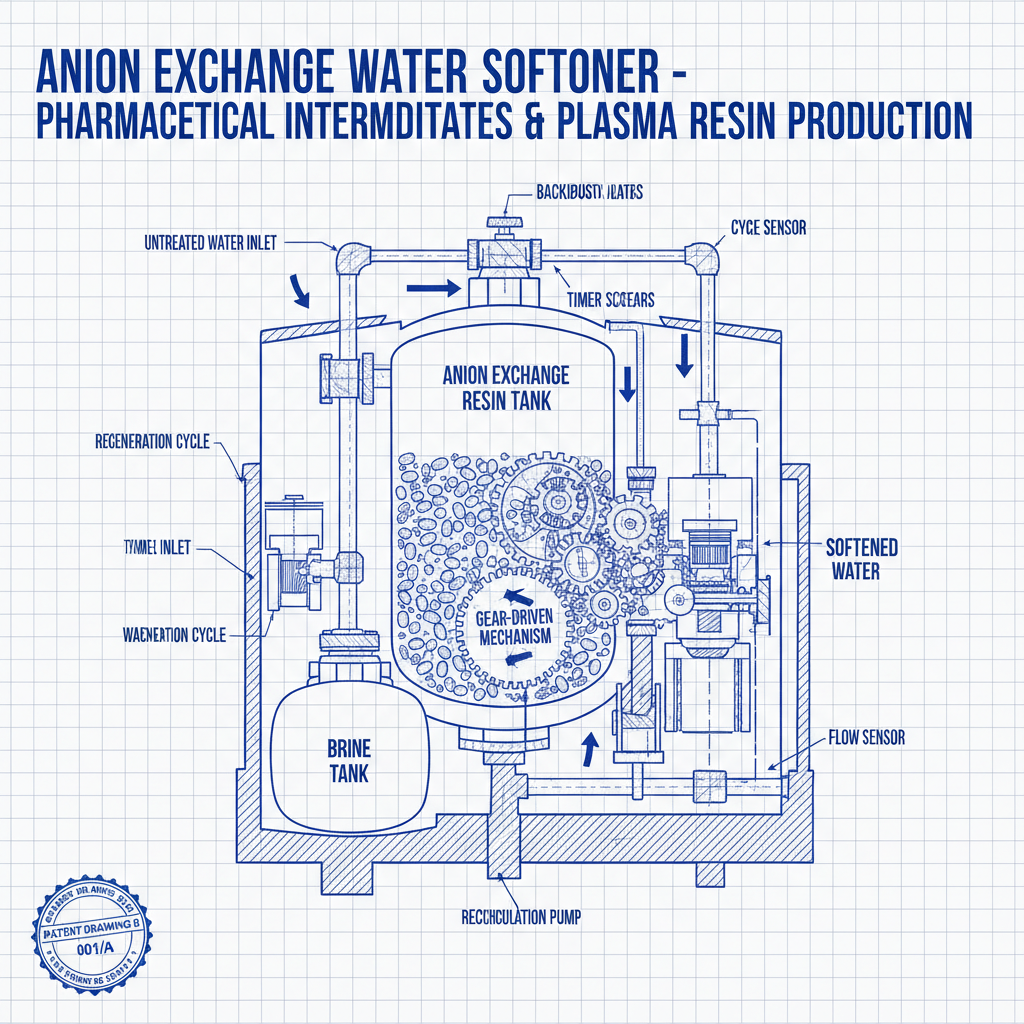
At its most basic level, ion exchange chromatography resin consists of an insoluble polymer matrix—typically polystyrene cross-linked with divinylbenzene—that is functionalized with charged chemical groups. These groups act as "docking stations" for ions of the opposite charge. For instance, a strong cation exchange resin will possess sulfonic acid groups that attract positively charged molecules while releasing a counter-ion, such as sodium or hydrogen.
This process is not merely a chemical reaction but a physical-chemical equilibrium. The strength of the bond between the resin and the target molecule depends on the charge density, the ionic radius, and the pH of the surrounding medium. By carefully adjusting the elution buffer's pH or salt concentration, operators can "trigger" the release of the bound target, effectively separating it from other components that either didn't bind or bind with different strengths.
In modern industry, this mechanism is the heartbeat of humanitarian and medical breakthroughs. Whether it is the desalination of water in drought-stricken regions or the purification of insulin for diabetic patients, the fundamental interaction between the resin's functional groups and the solute allows for the scalable production of life-essential substances with absolute precision.
Core Components and Performance Factors
The efficacy of an ion exchange chromatography resin is primarily determined by its porosity and surface area. Macroporous resins provide larger channels for the diffusion of bulky molecules, such as proteins, ensuring that the inner functional groups are accessible. In contrast, gel-type resins offer higher total capacity but may suffer from slower diffusion rates, making them more suitable for small inorganic ions.
Mechanical stability and chemical resistance are equally vital. A high-quality resin must withstand thousands of regeneration cycles involving strong acids or bases without collapsing. The degree of cross-linking determines the resin's rigidity; too little cross-linking leads to bead shrinkage and column compression, while too much can restrict the movement of target molecules into the matrix, reducing the effective capacity of the ion exchange chromatography resin.
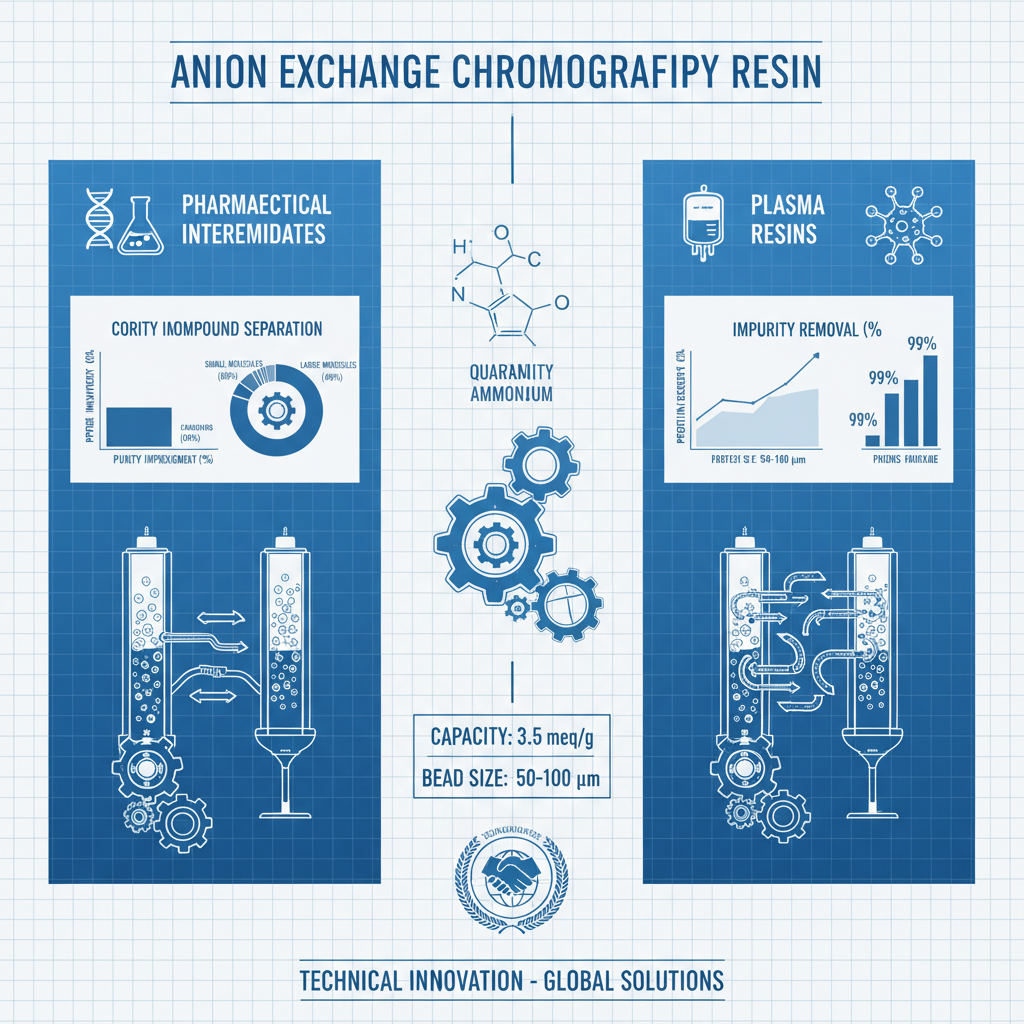
Finally, the selectivity of the functional group defines the resin's commercial value. Whether using quaternary ammonium groups for anion exchange or carboxylic groups for weak acid cation exchange, the choice must align with the pKa of the target molecule. Precision in this selection prevents "leakage" during the loading phase and ensures a sharp elution peak, which is critical for achieving the high purity levels required by pharmacopeia standards.
Industrial Applications and Global Use Cases
The application of ion exchange chromatography resin spans diverse sectors. In the pharmaceutical industry, it is the gold standard for the purification of recombinant proteins and vaccines. For example, during the production of therapeutic antibodies, resins are used to capture the target protein from cell culture supernatants, removing host cell proteins and DNA that could otherwise cause adverse immune reactions in patients.
Beyond medicine, these resins are critical in hydrometallurgy and environmental remediation. In remote industrial zones, specialized chelating resins are deployed to recover precious metals like gold, platinum, and uranium from low-grade ores or waste streams. Similarly, in post-disaster water relief operations, ion exchange systems are used to rapidly remove nitrate, arsenic, and fluoride from contaminated groundwater, providing safe drinking water to vulnerable populations.
Comparative Efficiency of Ion Exchange Chromatography Resin Types
Tangible Advantages and Long-Term Value
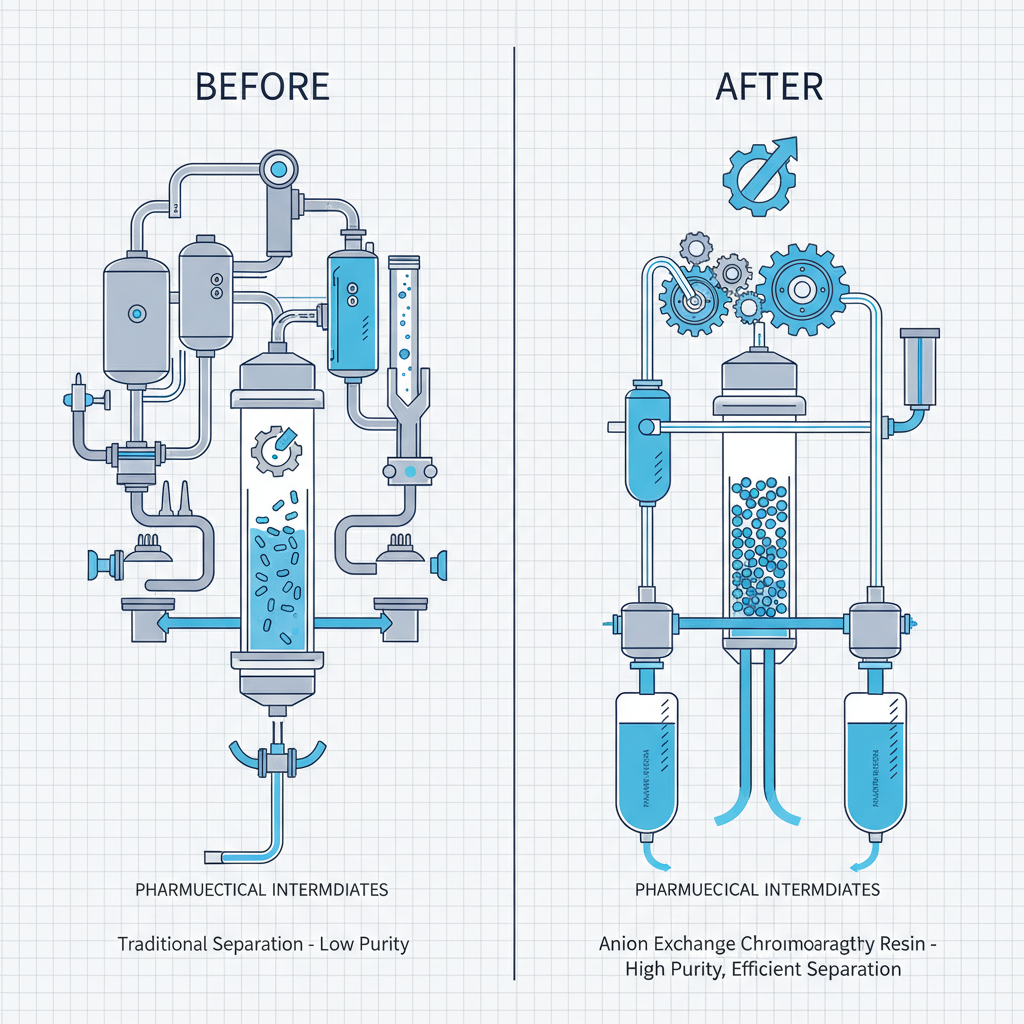
The primary advantage of implementing a high-grade ion exchange chromatography resin system is the drastic reduction in waste and increase in product yield. By enabling highly selective capture, manufacturers can recover valuable target molecules that would otherwise be lost in precipitation steps. This not only lowers the cost per gram of the final product but also aligns with global sustainability goals by reducing the volume of chemical reagents required for purification.
From a strategic perspective, the reliability of these resins fosters trust and safety. In the medical field, the ability to guarantee the absence of endotoxins or impurities translates directly into patient safety and dignity. Moreover, the scalability of the process—from a laboratory milliliter column to an industrial cubic-meter vessel—allows companies to innovate rapidly, moving from a discovery phase to full-scale market distribution with minimal redesign of the purification protocol.
Future Trends and Technological Innovations
The future of ion exchange chromatography resin is being shaped by the integration of digital transformation and material science. "Smart resins" are currently under development, featuring embedded sensors that can monitor the loading capacity in real-time, signaling exactly when a column is saturated. This automation eliminates the guesswork associated with breakthrough curves and prevents product loss, significantly enhancing operational efficiency.
Sustainability is also driving a shift toward bio-based polymer supports. Researchers are exploring the use of cellulose and chitosan derivatives as alternatives to petroleum-based polystyrene. These green resins aim to maintain the high selectivity of traditional materials while offering complete biodegradability, reducing the environmental footprint of the chemical manufacturing industry.
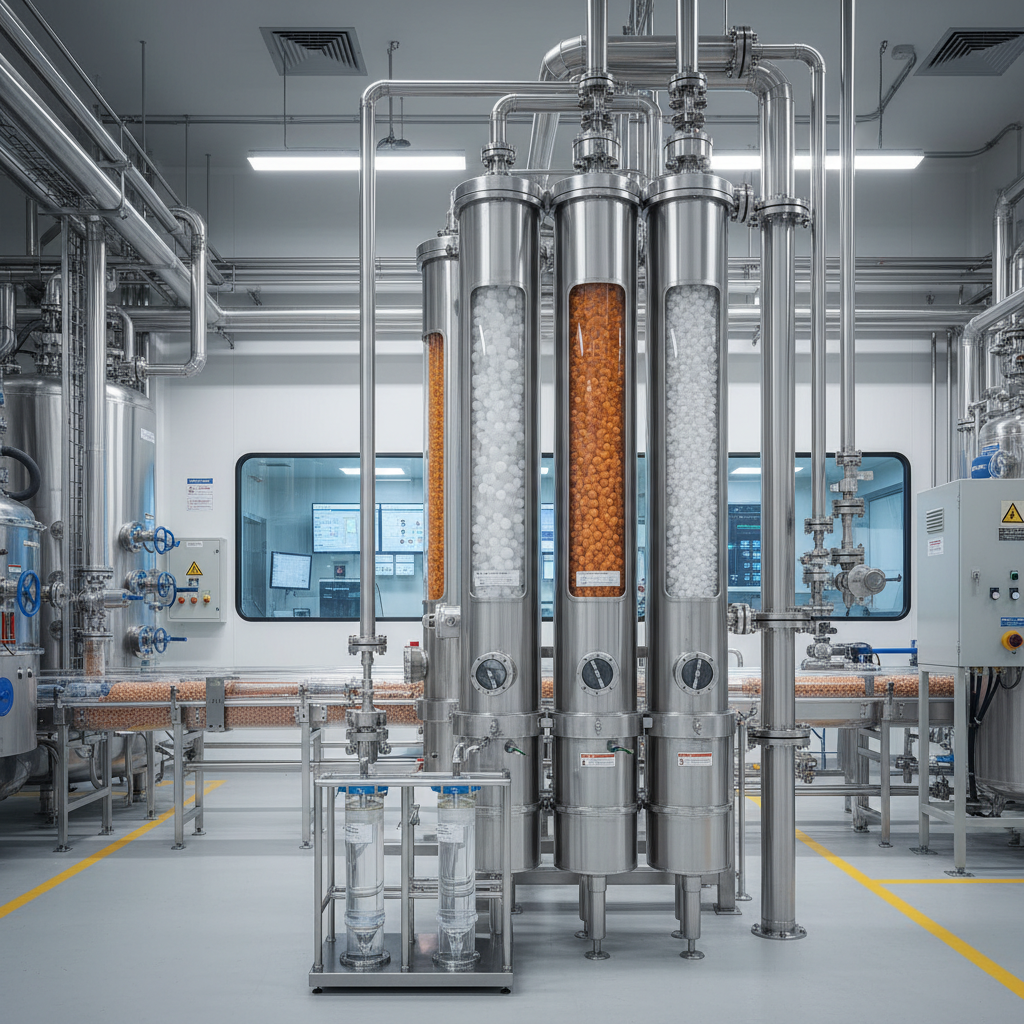
Furthermore, the rise of continuous chromatography (such as Simulated Moving Bed or SMB) is revolutionizing how these resins are used. Instead of batch processing, continuous systems allow for a constant feed of raw material and a constant stream of purified product. This transition not only increases throughput but also optimizes resin utilization, ensuring that every functional group on the ion exchange chromatography resin is used to its maximum potential.
Overcoming Technical Challenges in Resin Application
Despite their utility, challenges such as resin fouling and osmotic shock remain prevalent. Fouling occurs when large organic molecules or lipids irreversibly bind to the matrix, blocking the pores and reducing the effective capacity. To solve this, experts recommend implementing rigorous pre-filtration steps and employing "clean-in-place" (CIP) protocols using specialized detergents that can strip contaminants without damaging the resin's functional groups.
Osmotic shock—the rapid swelling or shrinking of beads during the transition between low and high salt concentrations—can lead to bead fracture. This is particularly problematic in high-pressure systems. The innovative approach to this is the development of "composite resins" that combine a rigid inorganic core with a flexible organic shell, providing the necessary mechanical strength to resist physical stress while maintaining high ion-exchange capacity.
Finally, the cost of high-performance resins can be a barrier for smaller laboratories. The solution lies in the optimization of regeneration cycles. By precisely calculating the minimum amount of regenerant needed to strip the bound ions, operators can extend the lifespan of the ion exchange chromatography resin, thereby lowering the total cost of ownership and making high-purity separation accessible to more users globally.
Comparative Analysis of Resin Performance and Maintenance
| Resin Category |
Selectivity Score (1-10) |
Durability (Cycles) |
Typical Application |
| Strong Acid Cation |
8 |
2000+ |
Water Softening |
| Strong Base Anion |
9 |
1500+ |
Demineralization |
| Chelating Resin |
10 |
1000+ |
Heavy Metal Recovery |
| Weak Acid Cation |
7 |
1200+ |
Organic Acid Removal |
| Mixed Bed Resin |
9 |
800+ |
Ultra-Pure Water |
| Specialty Adsorption |
8 |
1100+ |
Protein Purification |
FAQS
Strong resins remain ionized across a wide pH range, making them versatile for various conditions but sometimes less selective. Weak resins only ionize within a narrow pH window, which allows for much more precise control over the binding and elution process, often resulting in higher purity for specific target molecules.
The best way to prolong resin life is through strict pre-filtration to prevent fouling and the use of optimized regeneration cycles. Avoiding extreme temperature spikes and preventing the resin from completely drying out during storage also helps maintain the structural integrity of the polymer beads.
Standard ion exchange resins require a charge to function. However, specialty adsorption resins (often categorized within the same family) use hydrophobic interactions rather than electrostatic charges to capture non-ionic organic compounds, making them suitable for removing pesticides or dyes from water.
Leakage typically occurs when the resin reaches its breakthrough point, meaning all available functional groups are occupied. It can also be caused by "channeling," where the liquid finds a path of least resistance through the resin bed, bypassing a large portion of the active material.
While traditionally made from petroleum-based polymers, their ability to purify water and recover precious metals significantly reduces environmental pollution. The industry is currently moving toward bio-based polymers to further enhance the sustainability of the manufacturing process.
Start by determining the isoelectric point (pI) of your protein. If the operating pH is above the pI, the protein is negatively charged and requires an anion exchange resin; if below, a cation exchange resin is needed. Consider the molecular weight to decide between macroporous or gel-type matrices.
Conclusion
The strategic implementation of ion exchange chromatography resin is a transformative factor in modern chemical and biological processing. By combining the physics of electrostatic interaction with advanced polymer engineering, these resins enable the production of ultra-pure substances that drive innovation in medicine, energy, and environmental protection. From the critical selection of functional groups to the management of regeneration cycles, every technical detail contributes to a system that is both economically viable and scientifically rigorous.
Looking forward, the convergence of "smart" materials and continuous processing will further refine the efficiency of ionic separation. For companies seeking to optimize their purification workflows, investing in high-stability, high-selectivity resins is not just a technical upgrade but a strategic move toward greater sustainability and quality assurance. We invite you to explore our full range of high-performance solutions to elevate your production standards. Visit our website: www.lijiresins.com